The rule that matters most
If you hear thunder, go indoors immediately
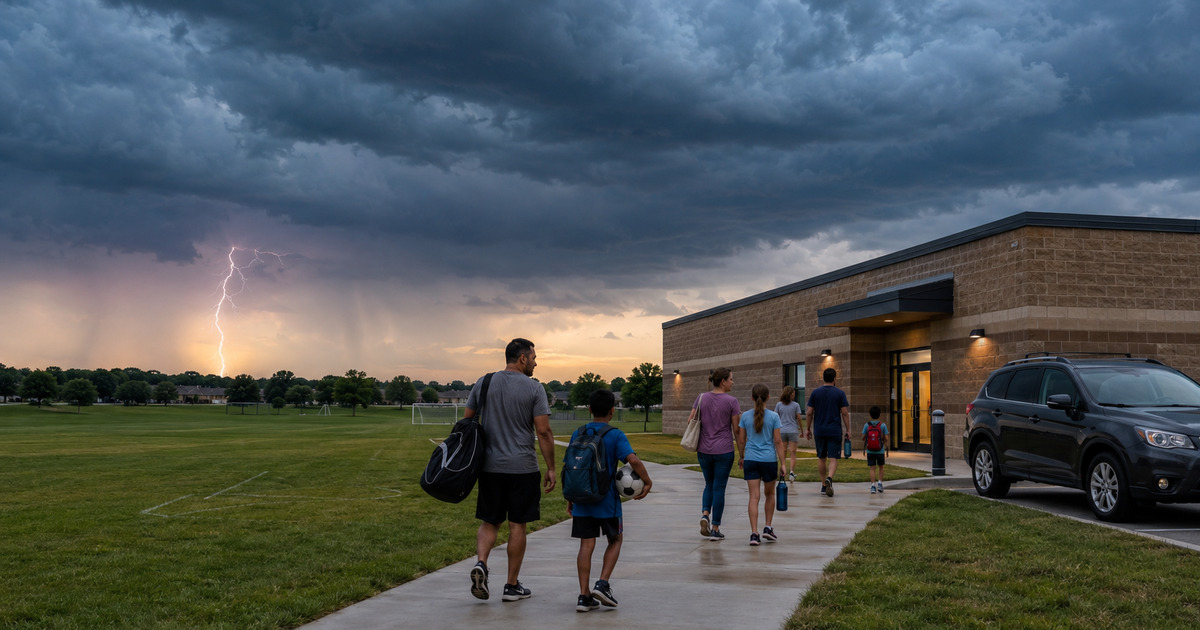
Thunder is produced by lightning. The National Weather Service says that if you hear thunder, lightning is close enough to strike you. A storm can send a bolt miles away from its rain shaft, so blue sky overhead, light rain, or a distant rumble does not make an outdoor location safe.
- Stop the activity at the first sound of thunder; do not wait for heavy rain.
- Move everyone to a substantial building or an enclosed, metal-topped vehicle with the windows up.
- Stay sheltered for at least 30 minutes after the last thunder is heard.
- Build travel time into the decision. A large group, beach, trail, golf course, or sports field may be several minutes from shelter.
Safe shelter
A roof alone is not enough
A substantial building protects people through its wiring, plumbing, and structure. An enclosed metal-topped vehicle offers protection because the metal shell carries current around the occupants—not because of the rubber tires. Many familiar outdoor structures do not provide that protection.
No place outside is safe during a thunderstorm. If safe shelter is nearby, use it. Outdoor risk-reduction steps are a last resort and do not make an exposed location safe.
Use the product name correctly
Outlooks, forecasts, watches, and warnings are not the same
Lightning safety begins before an alert appears. The official products describe different stages and hazards, but the sound of thunder is enough to trigger protective action.
- Outlook
- A severe-weather outlook identifies broad areas where severe thunderstorms may develop, often one or more days ahead. Use it to reconsider outdoor plans and identify shelter early.
- Forecast
- A local forecast describes expected weather for a place and time. A chance of thunderstorms is a reason to plan around shelter even if no watch or warning has been issued.
- Severe Thunderstorm Watch
- A watch means severe storms capable of damaging wind or large hail are possible in and near the watch area. Be prepared and monitor later information.
- Severe Thunderstorm Warning
- A warning means severe weather has been reported or indicated by radar and danger is imminent in the warned area. Move inside and away from windows. Lightning frequency itself is not a criterion for issuing this warning.
The NWS does not issue a separate warning for every dangerous lightning situation. Ordinary thunderstorms can produce deadly lightning without meeting severe-wind or large-hail criteria. Never use the absence of a severe-thunderstorm warning as permission to remain outside after thunder begins.
Outdoor plans and group events
Decide who stops the activity before the storm arrives
A useful lightning plan names the decision-maker, the safe shelter, and the route to it. The person monitoring weather should be able to stop play or work before people are exposed. The plan should include enough time for children, older adults, visitors, and people with mobility needs to reach shelter.
- Check the forecast and radar before leaving, then monitor changing conditions.
- Identify a substantial building or enclosed vehicle; do not count an open shelter or golf cart.
- Set a clear stop rule: thunder heard means everyone moves inside.
- Keep people sheltered for 30 minutes after the last thunder before resuming.
- For boating, swimming, or paddling, return to land and real shelter before the storm reaches the area.
Once you are indoors
Reduce contact with paths lightning can travel
A substantial building is much safer than remaining outside, but lightning current can enter through wiring, plumbing, phone lines, and the ground. Use the sheltered time to stay away from common conductive paths.
- Avoid sinks, showers, bathtubs, faucets, and other plumbing.
- Do not use corded phones or equipment connected directly to electrical outlets.
- Stay away from windows, exterior doors, porches, and concrete walls or floors.
- Using a mobile phone that is not plugged in is generally safer than using a corded phone.
- If someone is struck, call 911. A lightning victim does not retain an electrical charge and can be touched to provide first aid.
Why MyUSA.us publishes this
Official public weather information should be easy to act on
Americans already fund official forecasts, outlooks, watches, warnings, radar, and safety information. MyUSA.us organizes links to that public data without subscriptions, advertising clutter, or unnecessary tracking.
Official weather. No ads. No clutter.MyUSA.us is an independent weather website and is not affiliated with NOAA or the National Weather Service. Always follow official warnings and instructions from public authorities.
Page reviewed: August 20, 2026