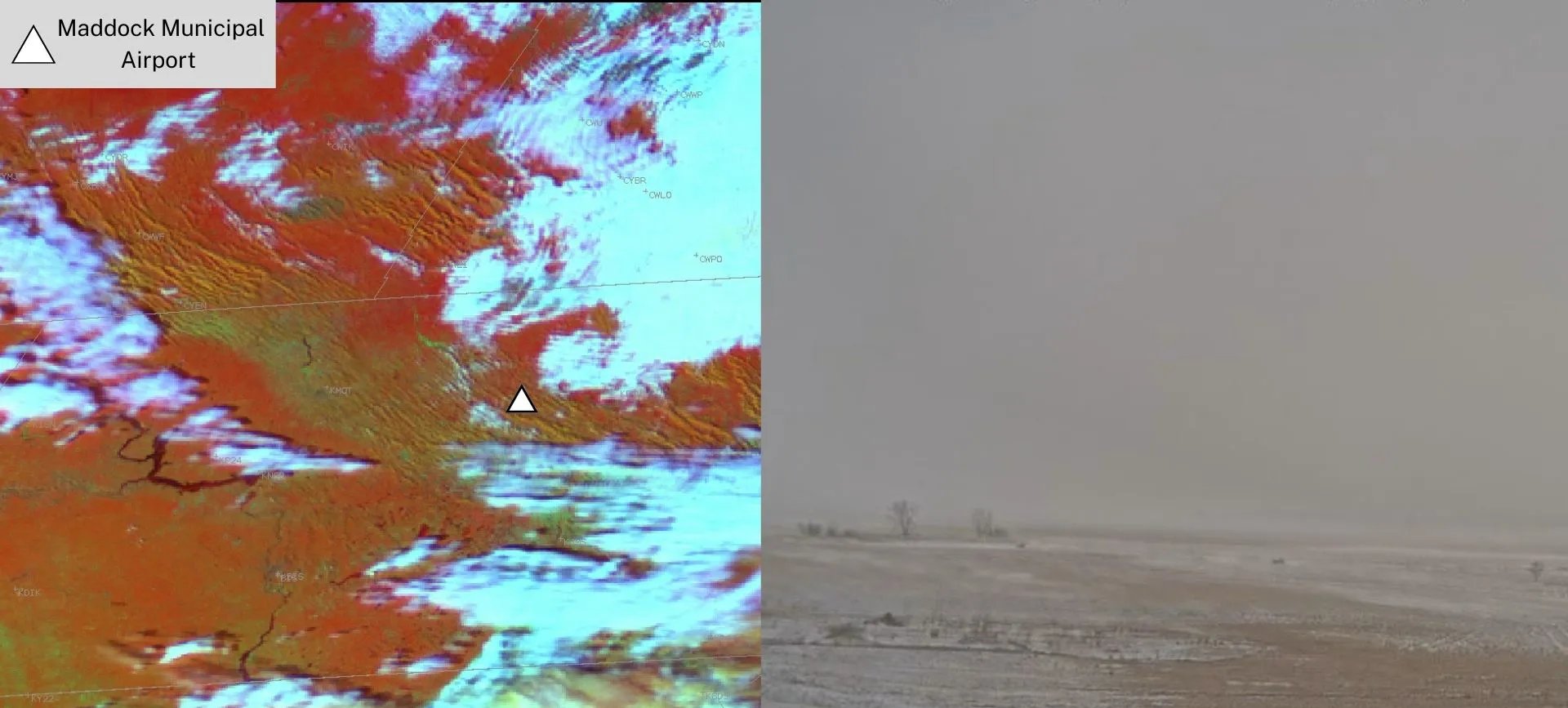
The quick answer · Falling snow is not required
Wind can turn snow already on the ground into a whiteout
The NWS defines blowing snow as wind-driven snow that reduces visibility; it may be snow that is still falling or snow lifted from the ground. When strong wind lofts an existing snowpack and produces blizzard conditions without new snowfall, the result is called a ground blizzard.
- Do not use radar alone. Radar may show little new precipitation while snow at road level is moving across the pavement.
- Check wind and visibility. Those are the immediate clues that blowing snow can change the drive.
- Read the alert text. The warning area, valid time, expected visibility, wind, and official action matter more than the label alone.
- Respect closures. A clear-looking departure point does not describe an exposed road farther along the route.
Three related hazards · Different timing
Blowing snow, a ground blizzard, and a snow squall are not interchangeable
- Blowing snow
- Wind-driven snow that reduces visibility. It may include falling snow, snow lifted from the ground, or both.
- Ground blizzard
- A blizzard created by previously fallen snow being lifted by strong wind. The sky can brighten while visibility near the ground remains dangerous.
- Snow squall
- A brief, intense snow shower with strong, gusty wind. It can create a sudden whiteout and icy roads even when accumulation is limited.
The travel result can look similar from a windshield, but the setup and timing differ. A snow squall normally arrives and departs quickly with active snowfall. A ground blizzard can continue after the storm has moved away if fresh, loose snow and strong wind remain.
Why it happens · Snowpack plus wind
Fresh, loose snow is easier for strong wind to lift
NWS guidance describes a common ground-blizzard setup: an Arctic cold front passes, temperatures fall, and wind increases rapidly over a fresh snowpack. The wind can then carry snow across open ground and roads, create drifts, and repeatedly cover pavement that was recently cleared.
Exposure matters. Open country, gaps between windbreaks, bridge approaches, and roads aligned with the wind may deteriorate much faster than sheltered streets. Visibility can also vary over a short distance, so one observation cannot guarantee conditions across an entire trip.
Official products · Different decisions
Outlook, forecast, watch, advisory, and warning are not synonyms
- Outlook
- An earlier planning signal that hazardous winter weather may develop. It does not say a blizzard will occur on every road in the outlook area.
- Forecast
- The expected wind, snow, temperature, and visibility for a place and time. Use the point and hourly forecast for route timing.
- Watch
- Conditions are favorable for a significant winter hazard. Review alternatives, supplies, and cancellation triggers before travel.
- Advisory
- Hazardous winter conditions are expected or occurring below warning criteria. Travel difficulty can still be significant.
- Warning
- Dangerous winter weather is expected or occurring. A Blizzard Warning means severe conditions with strong wind and frequent visibility below one-quarter mile for at least three hours; do not travel.
The NWS says a Blizzard Warning applies when sustained wind or frequent gusts reach at least 35 mph and falling and/or blowing snow frequently reduces visibility below one-quarter mile for three hours or more. Falling snow is not required when snow already on the ground supplies the whiteout.
Before a winter drive · Check the whole route
Use five checks before leaving—and be willing to stop
- Read every active alert. Confirm the issuing office, affected area, start and end times, and action statement.
- Check the point and hourly forecast. Compare wind, gusts, snow, temperature, and visibility with departure and return times.
- Check road closures and cameras. Use the responsible state or local transportation agency for current road information.
- Carry a winter survival kit. Include warm clothing, blankets, water, food, a charged phone, and other supplies appropriate for the route.
- Turn around before visibility collapses. If a Blizzard Warning includes the route, follow the NWS instruction not to travel.
Why MyUSA.us publishes this
Official public weather data should be clear and easy to use
Americans already fund official forecasts, outlooks, watches, advisories, warnings, satellite observations, and safety guidance. MyUSA.us helps connect those public tools without subscriptions, advertising clutter, or unnecessary tracking.
Official weather. No ads. No clutter.MyUSA.us is an independent weather website and is not affiliated with NOAA or the National Weather Service. Always follow current official warnings, road closures, emergency services, and public authorities.
Page reviewed: October 25, 2026